Reef restoration · Fiji
Rebuilding Fiji's reefs, together.
What began with Walt and Deborah Smith's coral work in Fiji has grown into a separate effort with local partners. ADE Project prepares coral fragments, grows them on underwater racks, replants suitable corals on affected reefs, and teaches people how the work is done.
ADE's website has its current projects and ways to take part.
The method
A fragment's journey back to the reef.
ADE describes a practical sequence: protect new fragments, let them grow, place them on suitable reef sites, then keep observing. The method depends on trained people and careful choices at each stage.
Read ADE's process-
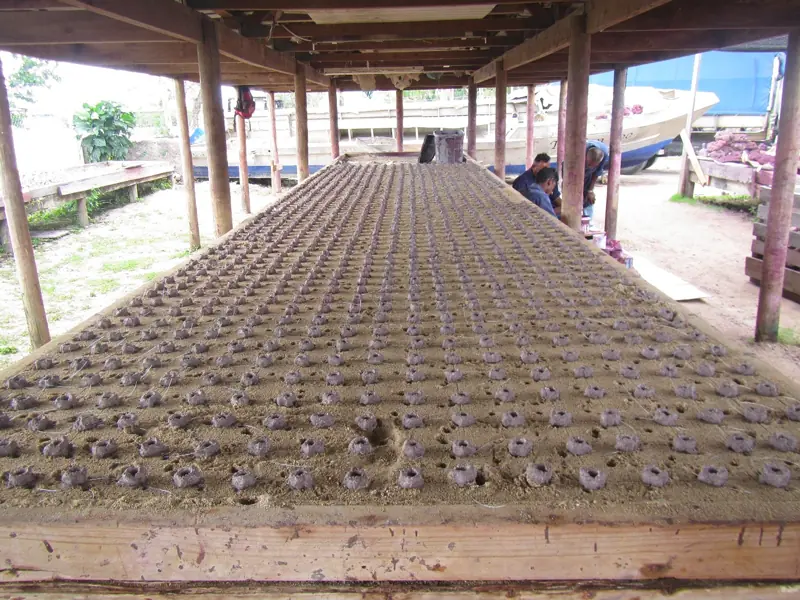
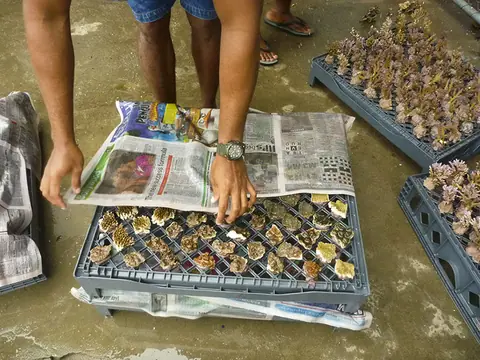
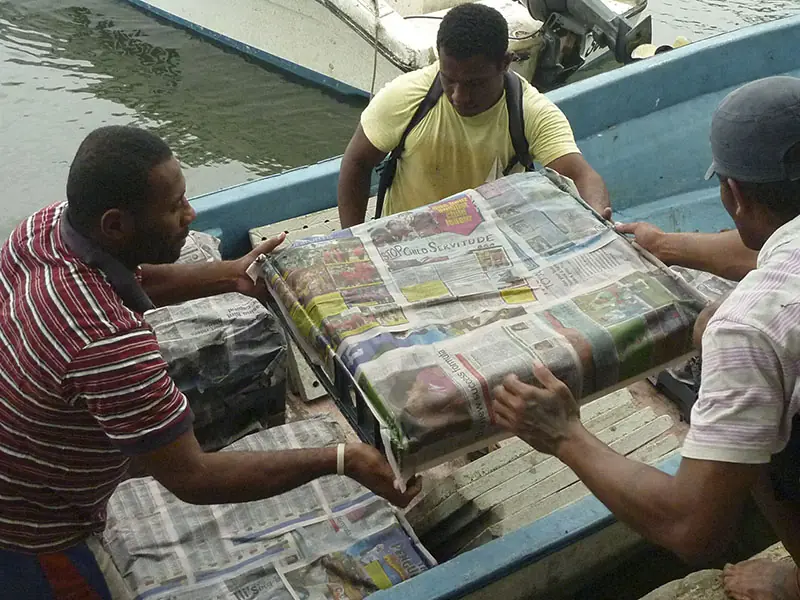
Prepared plugs; fragments protected for transfer. Source: ADE Project. Prepare
Trained teams attach coral fragments to specialized plugs that can be moved to nursery sites.
-
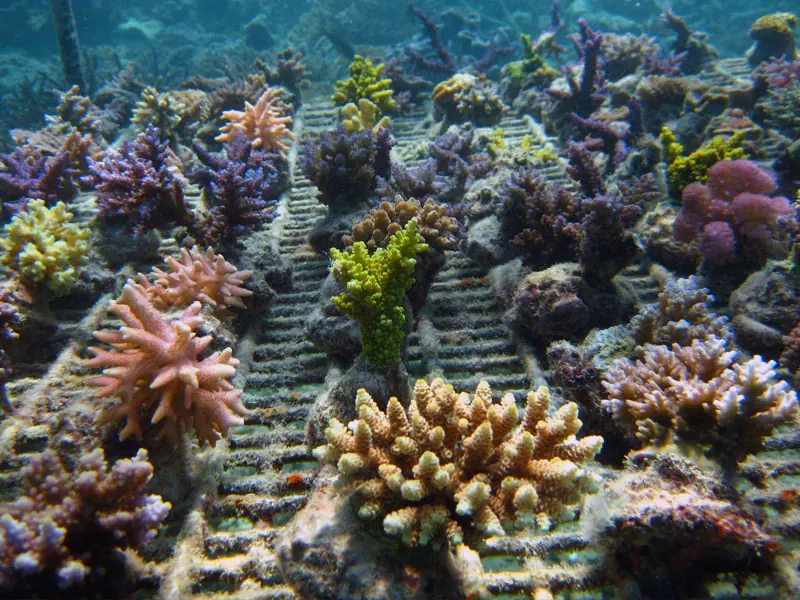
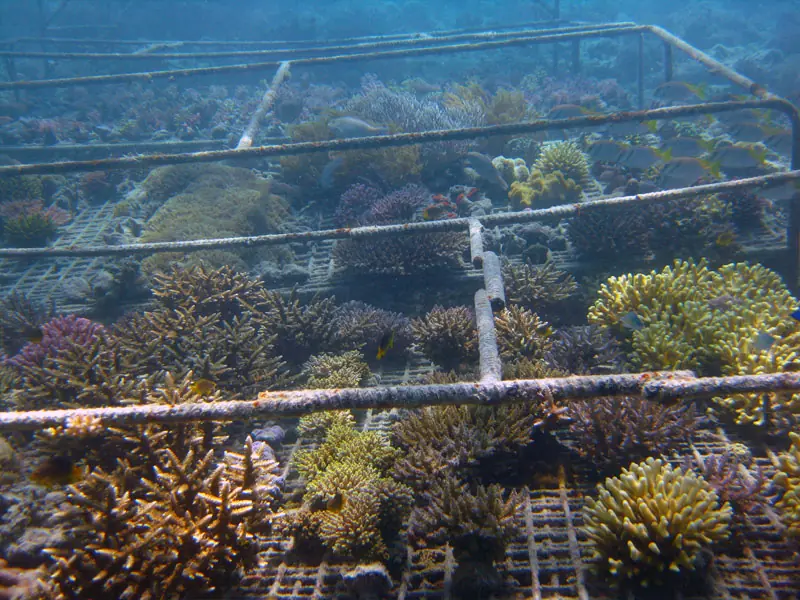
Corals on an underwater rack. Source: ADE Project. Grow
The fragments grow on underwater racks. ADE describes about 2–5 months of grow-out before suitable corals are ready for replanting.
-
Corals ADE identifies as ready for replanting. Source: ADE Project. Replant
Farm managers move grown fragments to affected reef areas and fit the plugs into natural crevices.
-
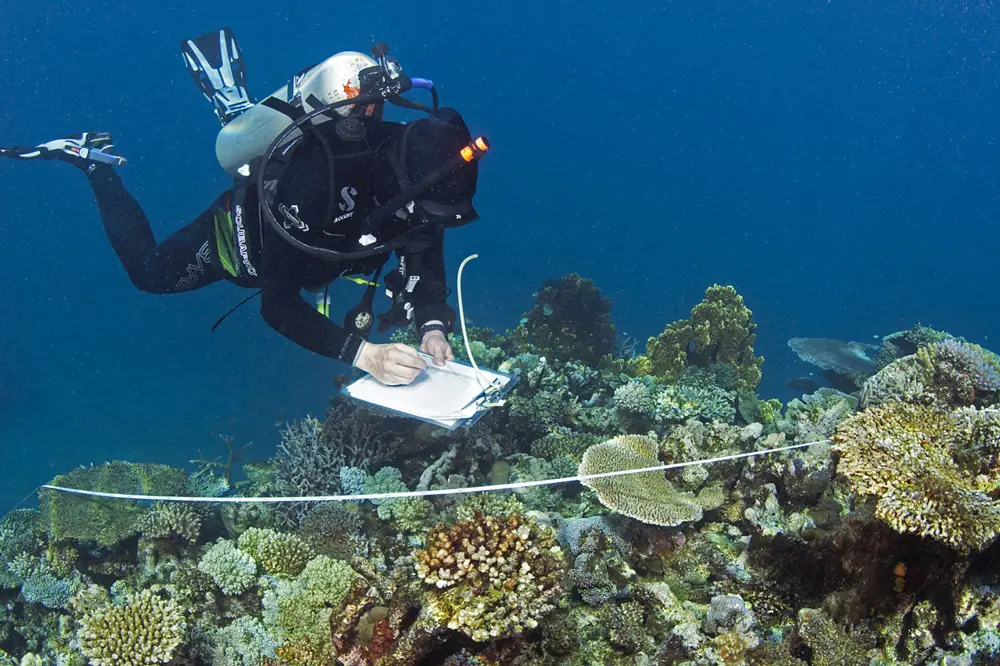
Monitoring the reef. Photo: Marj Awai, via ADE Project. Monitor
ADE describes returning to observe growth and record what happens after transplantation.
One rack, over time
Watch what time can show.
On its own site, ADE shares three photographs it identifies as the same coral grow-out rack at different stages. The original sequence shows growth on that rack; it does not measure recovery across an entire reef.
-
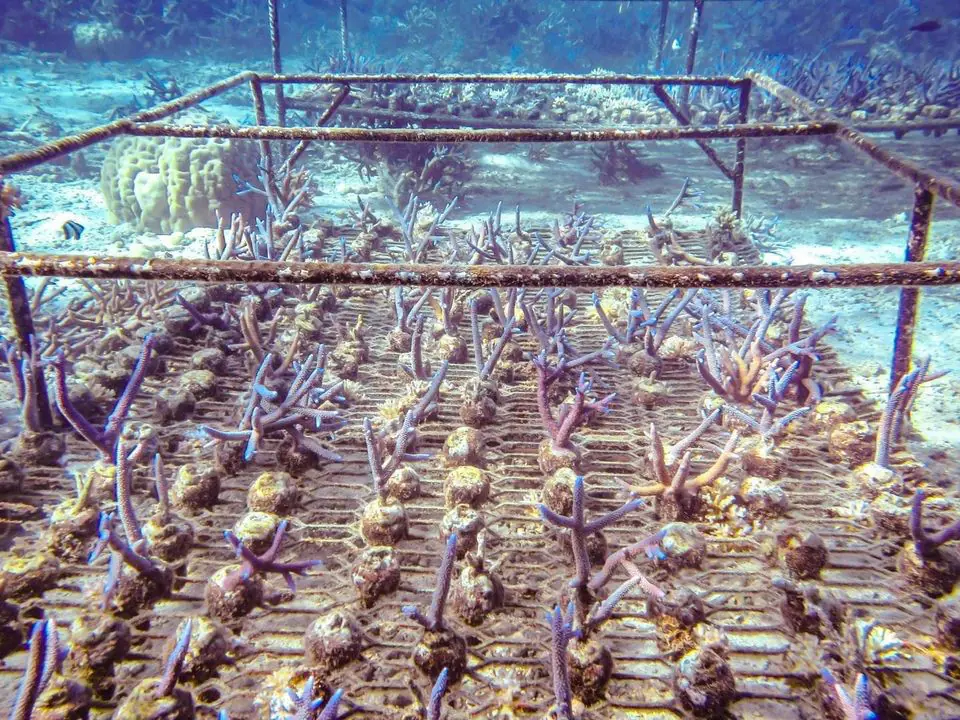
2 months ADE's first published view of this rack. -
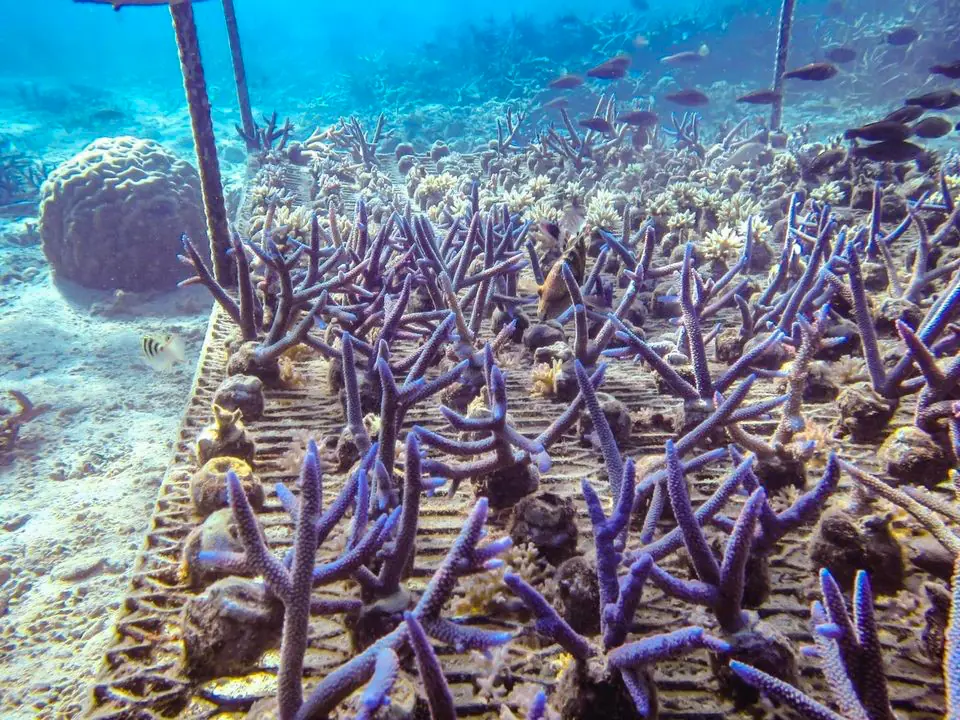
6–8 months The same rack at a later stage. -
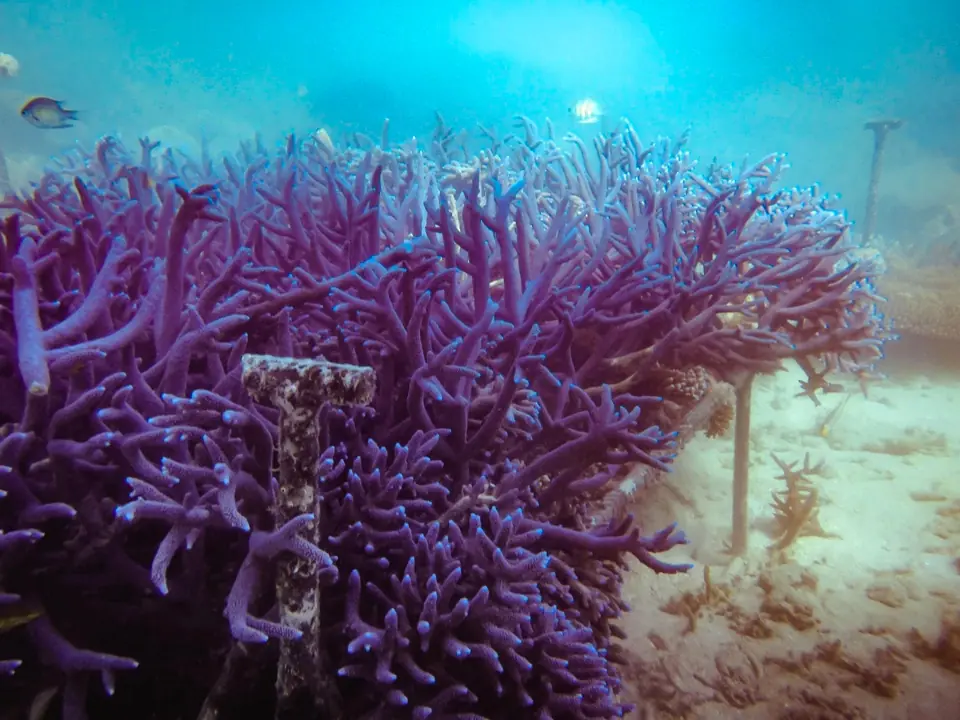
2 years The final view in ADE's sequence.
People and learning
The skills are shared locally.
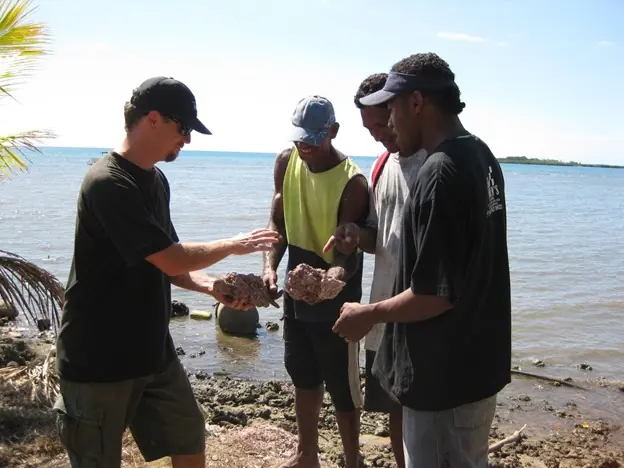
Village partners
ADE describes working with Fijian villages to set up nursery infrastructure and teach fragment preparation. Local participants help make and care for the coral bases that move from rack to reef.
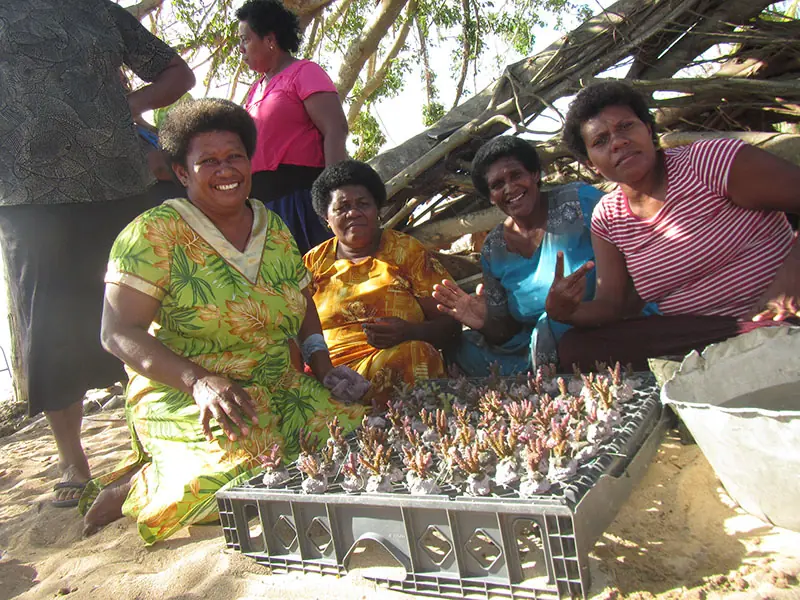
A shared practice
The people who prepare and care for the corals are part of the work. ADE's account describes the training and nursery infrastructure provided to participating communities.
Students in Lautoka
ADE also describes school visits to its Lautoka facility, where students learn about marine life and reef stewardship. The program is part of its education work, separate from the number of corals planted.
Field report · August 2025
Two days on one reef in Rakiraki.
1,080
corals reported planted
The Fiji Times reported that participants from Drauniivi Village, four University of Utah students, and ADE founders Walt and Deborah Smith were part of the August 2025 planting effort. The reported number describes planting activity, not how many fragments later survived.
Read the Fiji Times reportWhat the evidence says
Planting is a beginning, not the final measure.
What is documented
ADE publishes its cultivation and monitoring methods. The Rakiraki report records a specific planting effort, with a place, date and participants.
What takes longer to know
Long-term survival, coral cover and changes in fish communities need repeated measurement. ADE's March 2019 report lists these as research aims; it does not present them as completed results.
Blue Ocean Designs and ADE
Connected by people and purpose. Separate in their work.
Blue Ocean Designs is Walt's art and retail business. ADE Project is a separate reef restoration and education effort. This page introduces its published work; ADE's own site is the place to follow its projects and learn how to participate.
A portion of Blue Ocean Designs profits supports ADE Project reef restoration.